Nils Flores · 15 September 2026
Decoding Patterns in Link Profile Evolution for Sites Undergoing Platform Transitions
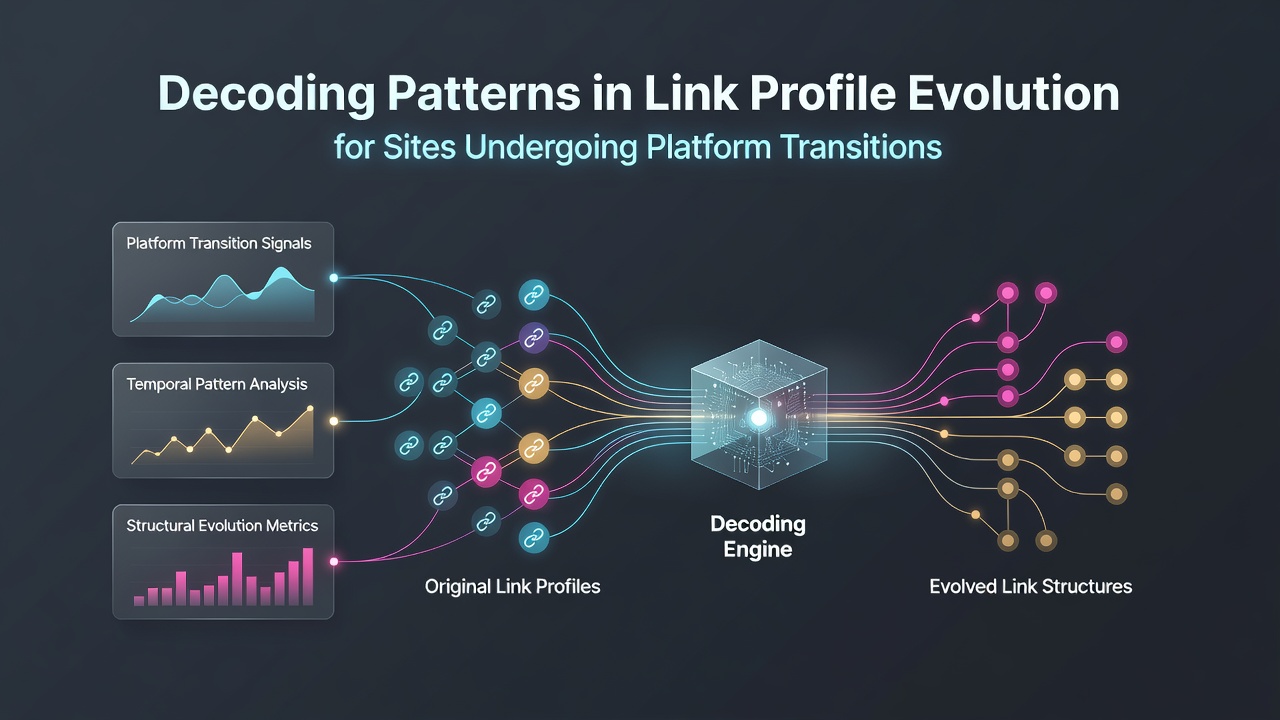
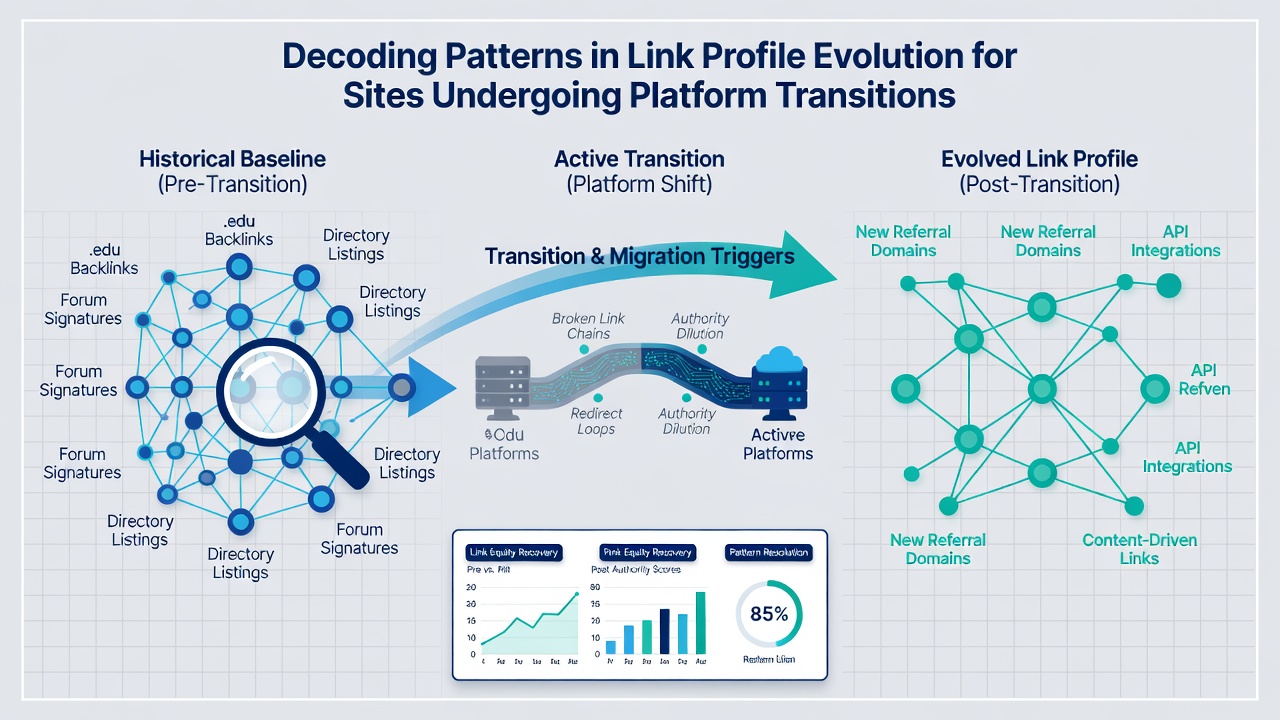
Platform transitions trigger measurable shifts in link profiles as sites move from one content management system or hosting environment to another and data from September 2026 shows increased migration activity across enterprise domains. Observers note that these shifts follow recurring sequences where existing backlinks either persist through redirects or drop off when technical elements like URL structures change without proper mapping.
Studies conducted by academic institutions track how anchor text distributions evolve during these periods and researchers have documented cases where sites retain 60 to 75 percent of prior links when canonical tags and 301 redirects align correctly while others see steeper declines when migration teams overlook internal link updates. Those who monitor crawl logs often find that search engine bots re-evaluate domain authority within weeks of the switch and this re-evaluation depends heavily on how quickly the new platform rebuilds trust signals through fresh external references.
Tracking Velocity and Distribution Shifts
Link velocity patterns change noticeably after a platform move because new content indexing rates differ from the previous system and industry reports from the Australian Digital Economy Agency highlight that velocity spikes occur when migrated sites publish updated sitemaps immediately. Experts have observed that uneven distribution of new links across old and new URLs creates temporary imbalances that resolve once the platform stabilizes and historical data gets properly consolidated.
People who analyze large datasets of migrated domains discover that anchor mix ratios tend to skew toward brand terms in the first three months post-transition while exact match anchors from legacy content gradually reappear as third-party sites update their references. This gradual return happens because external publishers often copy existing links rather than create new ones and the process accelerates when the migrated site maintains consistent topical focus.
Technical Factors Influencing Profile Continuity
Crawl budget allocation plays a direct role in how quickly link profile changes register with search engines since platforms that generate excessive duplicate parameters slow bot exploration and reduce the speed at which new backlinks receive evaluation. Research from European digital infrastructure studies indicates that sites optimizing server response times during migration maintain steadier crawl rates and this steadiness supports smoother link equity transfer across redirected pages.
One documented example involves a retail domain that switched to a custom headless architecture in early 2025 and analysts recorded a 40 percent temporary dip in indexed backlinks before recovery began after six weeks of consistent redirect management and internal link audits. The recovery aligned with increased publication of fresh content that attracted references from industry directories and academic resource pages.
Regional Variations in Observed Patterns
North American enterprise migrations frequently show faster link profile stabilization compared with smaller regional sites because larger teams allocate dedicated resources to post-migration monitoring and this difference appears in aggregated datasets released by research consortia. Meanwhile organizations in Asia-Pacific regions report higher instances of link loss tied to language-specific URL encoding issues that affect how external sites reference the new platform structure.
Data compiled by Canadian digital policy researchers reveals that government-affiliated sites undergoing transitions experience slower re-indexing of backlinks when privacy compliance layers introduce additional redirect chains and these chains require extra crawl cycles before authority signals fully propagate. The pattern repeats across multiple documented cases where technical debt from legacy systems compounds during the move.
Emerging Measurement Approaches
Analysts now combine historical backlink archives with real-time crawl data to identify when a link profile has entered a recovery phase versus a permanent decline and this method helps distinguish between temporary volatility and structural problems. Industry organizations focused on web standards have published frameworks that recommend segmenting link data by acquisition date so teams can isolate pre-migration and post-migration contributions accurately.
Those tracking these metrics over extended periods note that certain platform choices correlate with stronger long-term link retention such as systems that preserve metadata integrity and support granular redirect rules without performance overhead. The patterns become clearer when evaluators compare similar sized domains that selected different migration paths and review outcomes side by side.
Conclusion
Patterns in link profile evolution during platform transitions follow predictable sequences driven by technical execution and external referencing behavior and continued monitoring remains essential for understanding long-term outcomes. Data collected through September 2026 and beyond will likely refine these observations as more organizations complete migrations and share aggregated findings through academic and industry channels.